
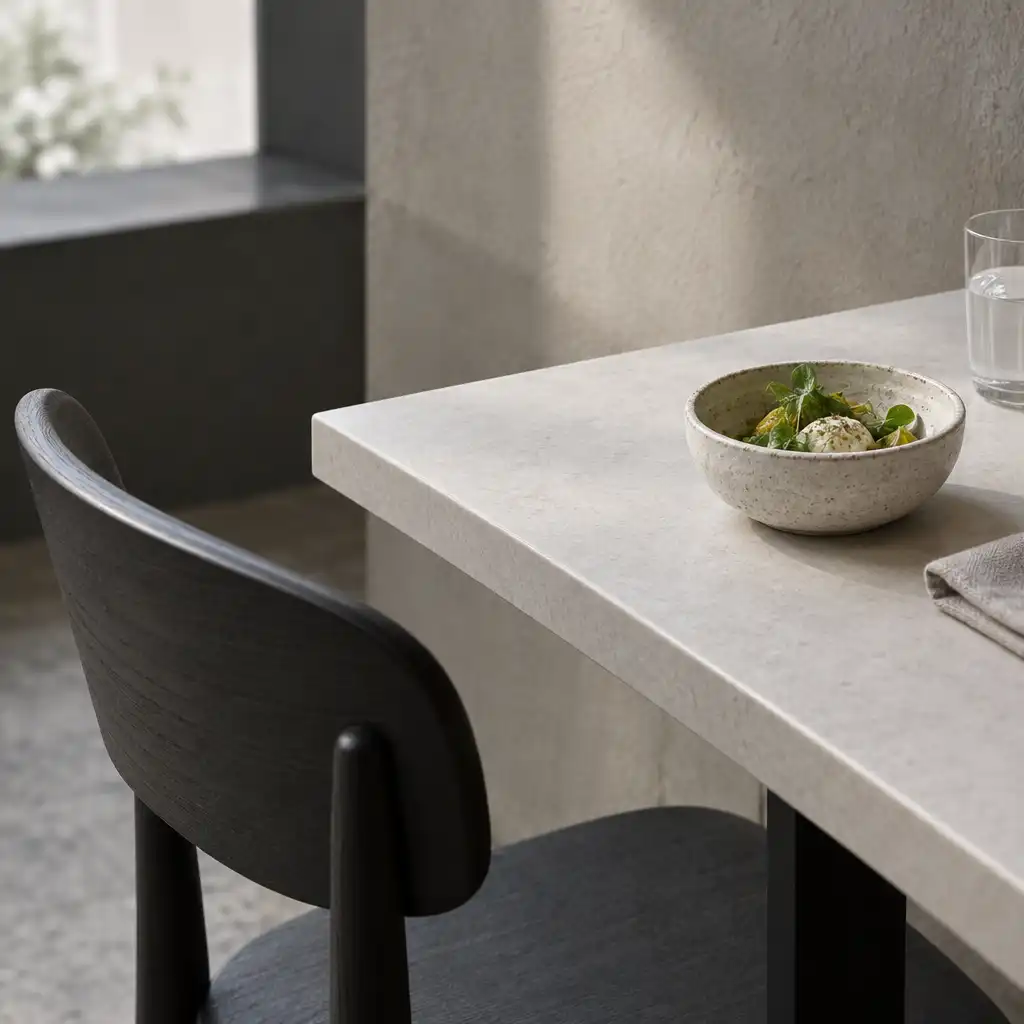
A restrained setting leaves visual room for the plate, the shared conversation and the dishes that change through a meal. Glassware, linen, cutlery and table surface work as useful elements rather than ornament. The result is a table that feels prepared, but never crowded before the food arrives.
The Space
A room for the meal, the conversation and an easy arrival.
At Bites & Bowl, the room is read through light, tables, material and service rather than treated as decoration. It is part of how a meal lands: where dishes arrive, where conversation finds its pace, and where a visit begins before the first plate reaches the table. Explore the details below, then move on to the practical side of planning your visit.
Plan your visit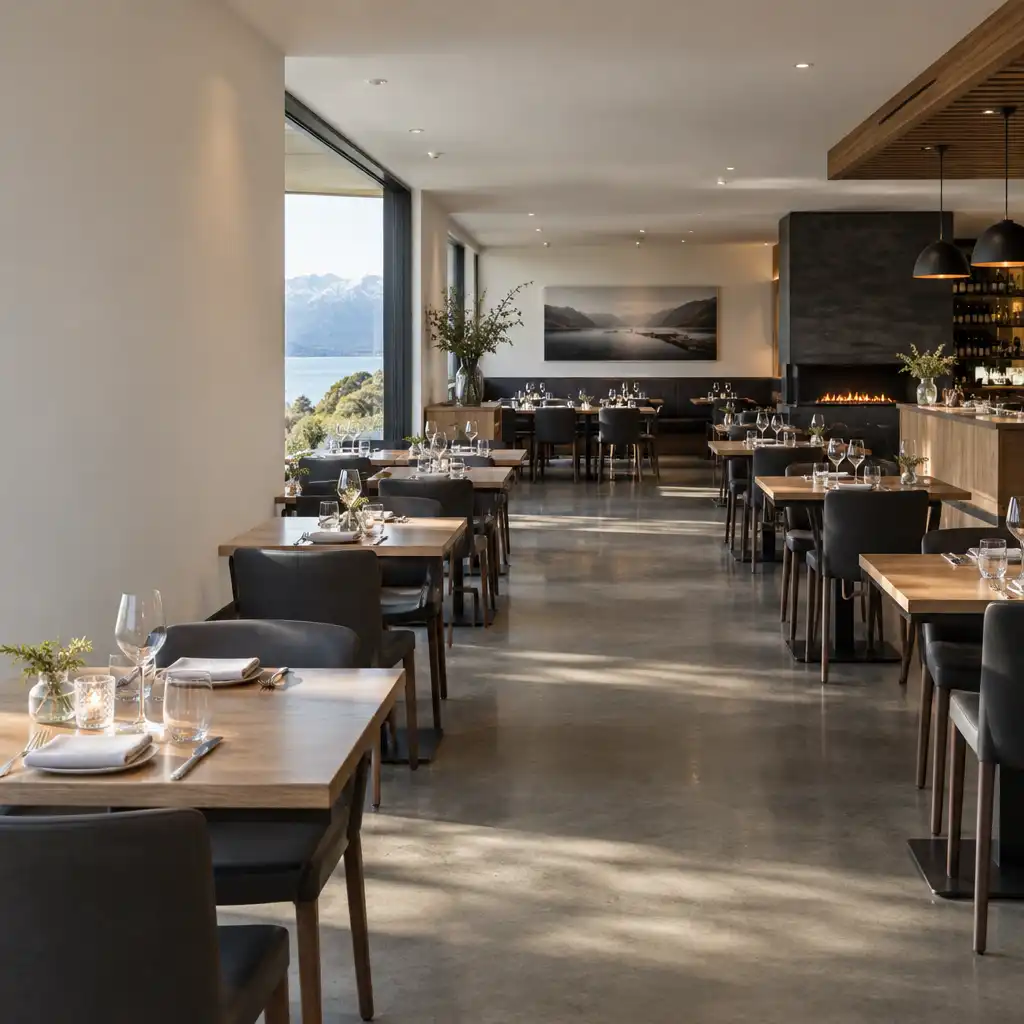
The first impression
Arrival is a composed transition from the street to the table. Light moves across the room, sightlines remain clear, and the setting is ready to receive the small details of a meal: a glass being poured, a dish being set down, a question shared before ordering. The room is not asked to perform ahead of the food; it makes space for anticipation.
That sense of readiness continues once diners are seated. Tables give the plate a clear place, while the wider room stays present as a calm backdrop for conversation, noticing ingredients and taking time over what comes next.
The room makes attention feel easy: towards the table, the plate and the people sharing it.
Made for the table
The table is the room’s working surface: clear, tactile and ready to let dishes take focus. At Bites & Bowl, the setting supports a food-led meal without competing with it, giving ingredients, serving pieces and the changing shape of the table a readable place.
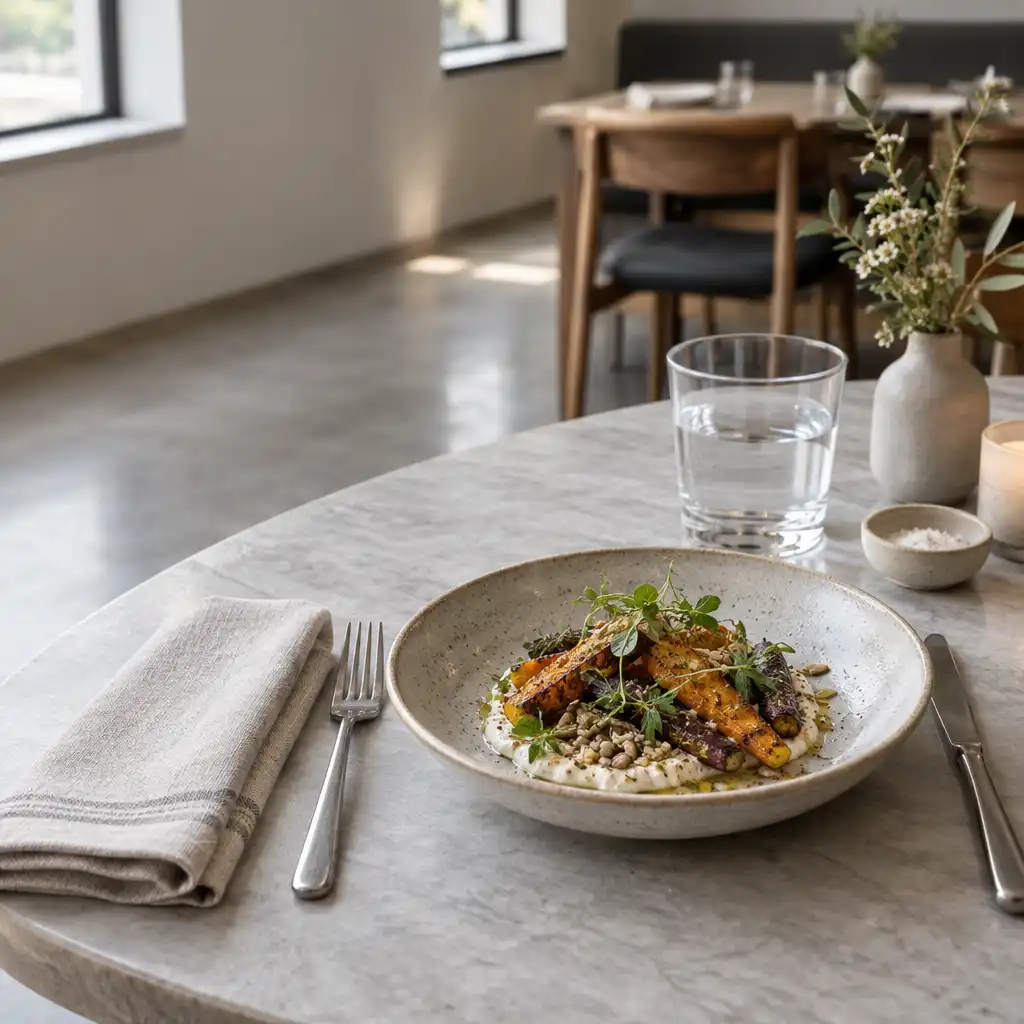
The room can feel composed without feeling rigid. A table has enough order to settle into, then enough openness for a meal to unfold at a human pace: a pause to look, a moment to share, and space to follow the direction of the dishes and conversation.
A room with changing light
01 Light sets the tempo
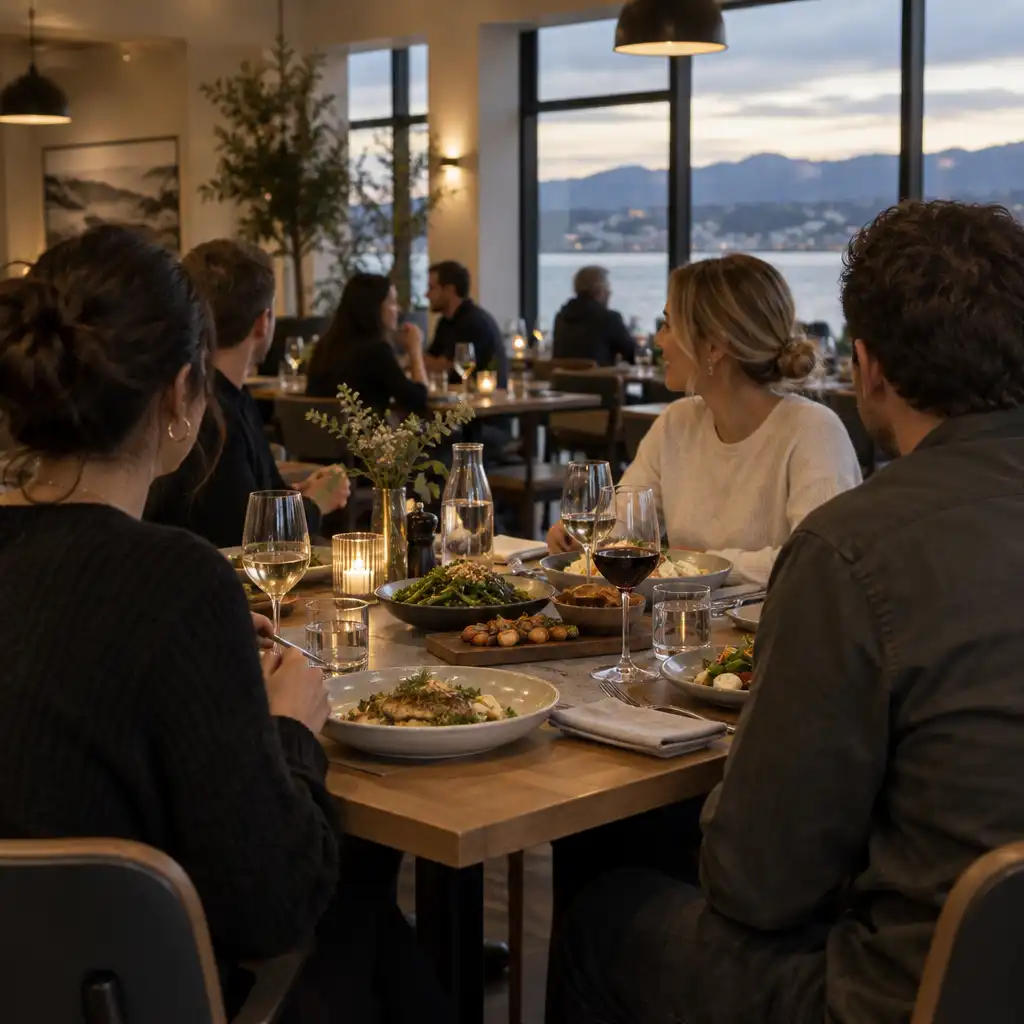
As daylight shifts and evening illumination takes over, the room’s pace changes without becoming a different place. The important details stay close at hand: food remains easy to see, faces stay readable and the table holds attention. The changing light simply gives the meal a different frame as diners settle further into it.
02 Sound stays part of the room
Conversation, movement and the presence of the kitchen can all be part of the dining atmosphere. Rather than disappearing into the background, those sounds help the room feel occupied and active. The shared energy remains connected to what is happening at nearby tables, while each table still has room for its own exchange.
03 The pace leaves space
Attentive service supports the rhythm of the table without making the meal feel rushed. A useful check-in, a clear explanation or a well-timed dish can help diners stay with the food and with one another. The point is not to direct every moment, but to leave room for the meal to find its own pace.
Interior gallery
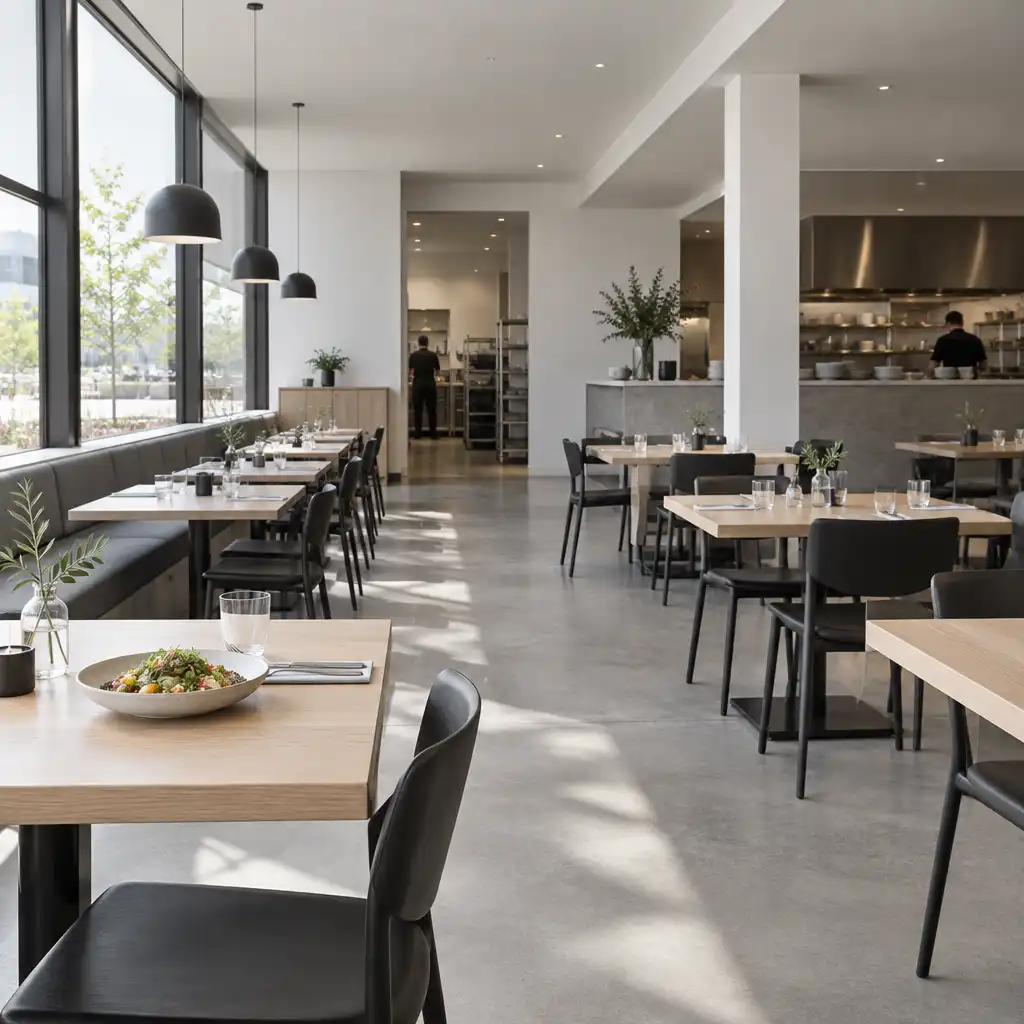
Read these images as different distances from the same room: wide, shared and close. They offer an impression of atmosphere and detail rather than a virtual tour, following the routes through the dining room and the quieter surfaces that support the table.
The atmosphere at the table
Atmosphere is not one fixed mood. It is the way the room, the food and the people in it meet at the table, leaving space for different reasons to dine while keeping the meal at the centre.
For a focused meal
Clear sightlines and uncluttered settings help the food lead. There is room to notice a dish as it arrives, to follow its ingredients and to let the table change without visual noise. For diners coming to explore the menu, the setting keeps the meal readable: the plate has presence, and the surrounding room gives it space rather than distraction.
For conversation
The room supports people settling into a conversation while remaining part of its shared energy. A table can hold a quiet exchange, a running story or the ordinary pleasure of catching up, with the wider movement of dining around it. Nothing needs to be sealed away for a conversation to feel considered; the room simply leaves enough space for it.
For a considered occasion
Some meals call for making time. The room gives that intention a steady setting, where the table, dishes and service can work together without turning the occasion into a performance. Whether the reason for gathering is simple or significant, the focus remains on being looked after through a meal and sharing the time it creates.
Service in the room
Present when useful
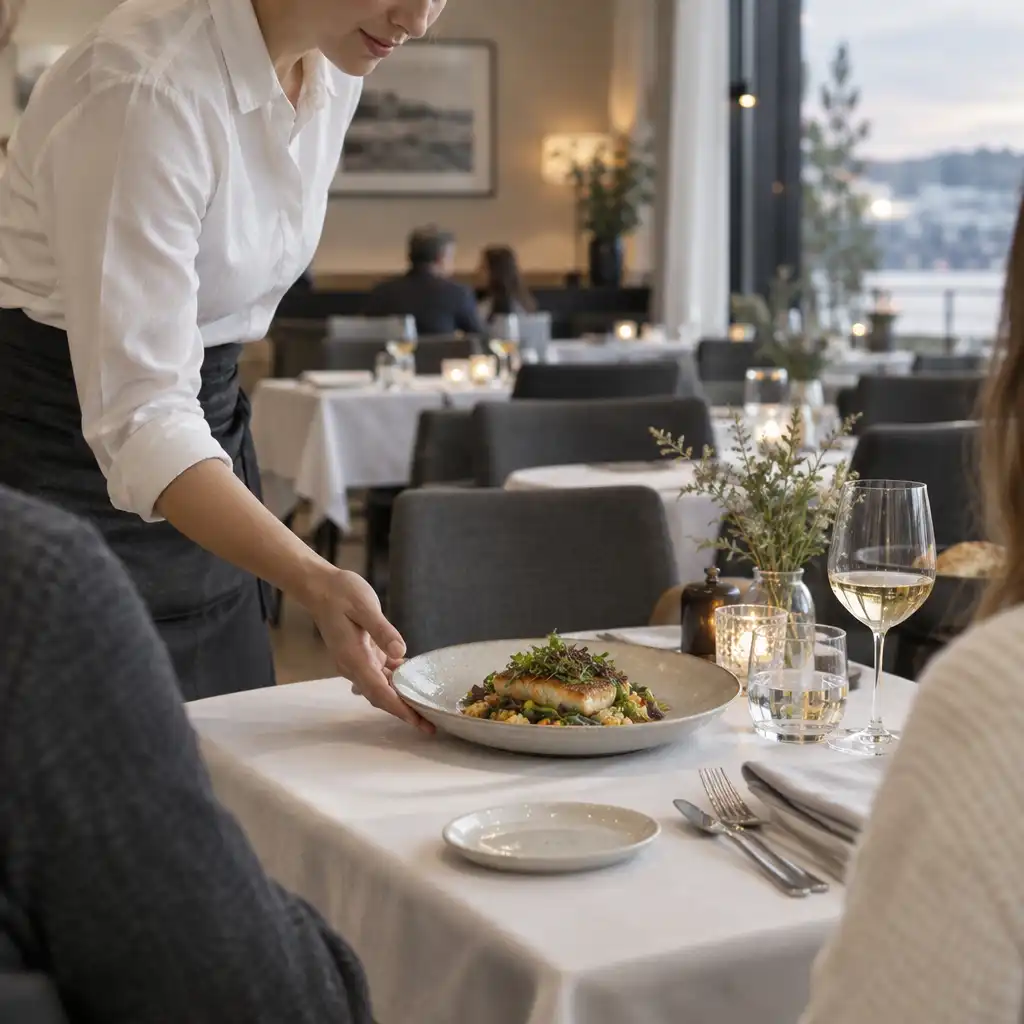
Attentive service begins with reading the table. Sometimes that means guiding diners through a dish or answering a question with clarity; sometimes it means recognising when conversation and food need the room to themselves. The service is part of the spatial experience because it shapes how easily a table can settle.
At Bites & Bowl, the aim is a steady, useful presence: clear when something is needed, unobtrusive when diners are already engaged. That attention lets the room stay calm while the meal remains the point of focus.
Good service keeps the focus on the meal and the people sharing it.
See the room, then plan the table
When the feeling of the room is clear, the practical details are easier to place. Use the pages below to explore dishes, understand the kitchen and find confirmed visit information before sending a booking enquiry.
See the dishes and ingredients that can shape the table before you plan your visit.
View the menuRead about the culinary approach behind the dishes and the thinking that guides them.
Meet the kitchenFind the dedicated page for confirmed practical information before arranging your visit.
Plan your visitA booking form sends an enquiry, not a confirmed reservation. Bites & Bowl will confirm a table only after your enquiry has been reviewed and confirmed directly.