Our Kitchen

Ingredient-led cooking, made with attention.

Bites & Bowl brings clear flavours, considered preparation and attentive service together at the table. This is a closer look at how ingredients, balance and small final decisions shape the food, and how the room makes space for each dish to be enjoyed.

View the menu

01 / Ingredients

Start with the ingredient

Before deciding what belongs around an ingredient, the kitchen pays attention to its character: its texture, freshness, richness, acidity or natural sweetness. That first observation gives the plate a direction. It helps determine whether an element needs contrast, a quieter companion or simply room to be recognised on its own.

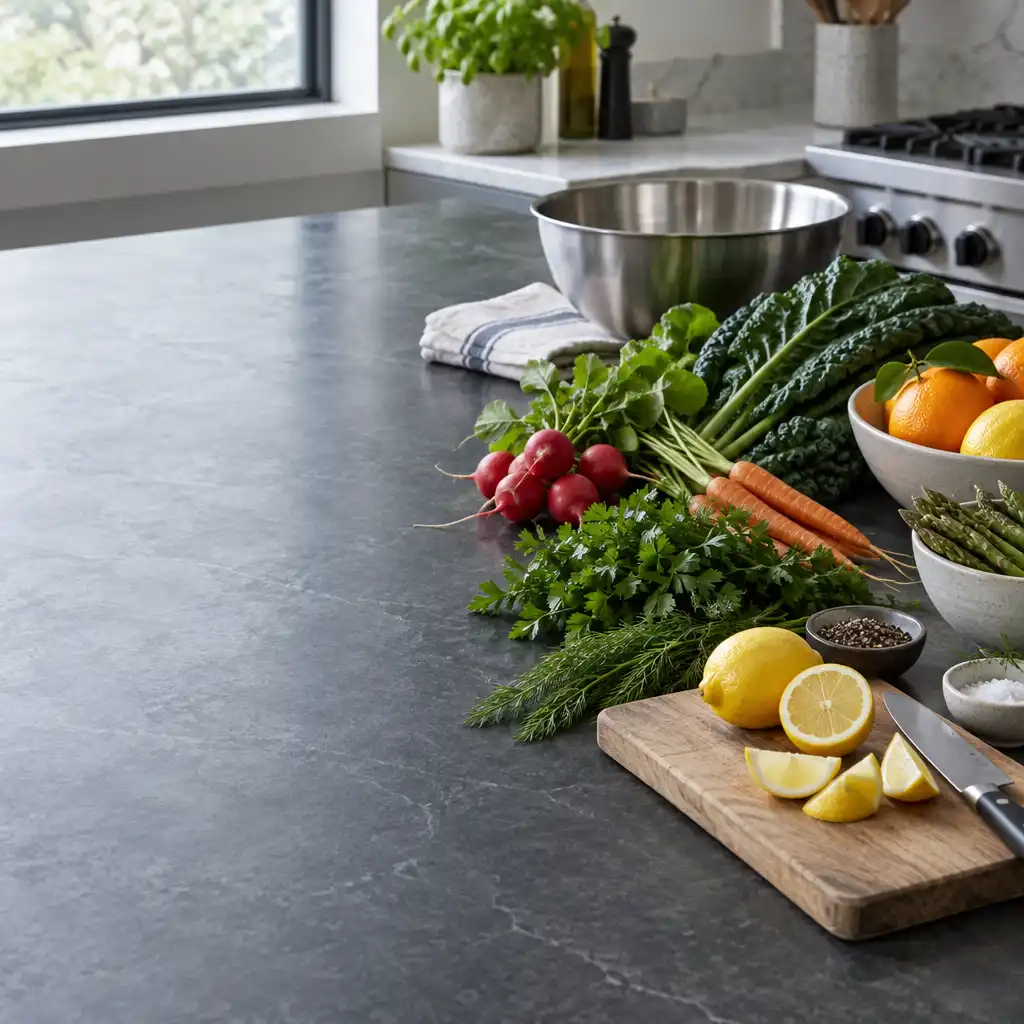
Fresh produce, herbs and citrus arranged on a kitchen preparation bench
A preparation bench where colour, texture and proportion can be considered before a dish takes shape.

Clarity over clutter

A dish works best when every element has a job. One component may bring contrast, another lift, another savoury depth or softness. Rather than adding detail for its own sake, the aim is to make those relationships easy to taste: a plate with enough going on to feel complete, and enough clarity to understand what is there.

Taste as the measure

Seasoning and finishing are considered in relation to the whole dish, not saved for the end as an afterthought. Acidity can sharpen richness; warmth can carry aroma; crunch can wake up softness. These are useful kitchen cues, but the measure remains simple: does each part help the final bite feel balanced and satisfying?

Enough, not excess

The main ingredient should remain recognisable, even when supporting components bring the plate together. Restraint leaves room for flavour and texture to register without competing for attention. It also makes a meal more approachable: food can feel carefully composed while still inviting you to settle in, eat well and return to the next bite.

02 / Preparation

Preparation with purpose

Preparation is the quiet work that gives service its pace: organised, deliberate and responsive to what a dish needs. It creates a useful foundation for consistency and care, so attention can stay on flavour, texture and the moment food reaches the table rather than on unnecessary complication.

01

Build layers deliberately

Components are prepared to bring different temperatures, textures and flavours into a coherent dish. A warm element, a cooler note, something crisp or something yielding can each have a place when they support the final balance. The point is not complexity for its own sake, but a plate that feels connected from first bite to last.

02

Cook for contrast

Contrast helps food stay lively. Crisp can sit beside soft, bright beside rich, and warm beside cool where it suits the dish. Not every plate needs every contrast, but considering their relationship helps avoid a flat experience. The result is food with movement: clear flavours that meet, change and remain easy to enjoy.

03

Finish close to service

Final seasoning, plating and small finishing details are considered at the point of service, when the whole plate can be seen together. That last look is about readiness rather than ceremony. It helps each dish arrive with intention, so the work in the kitchen carries through to an experience that feels settled and generous at the table.

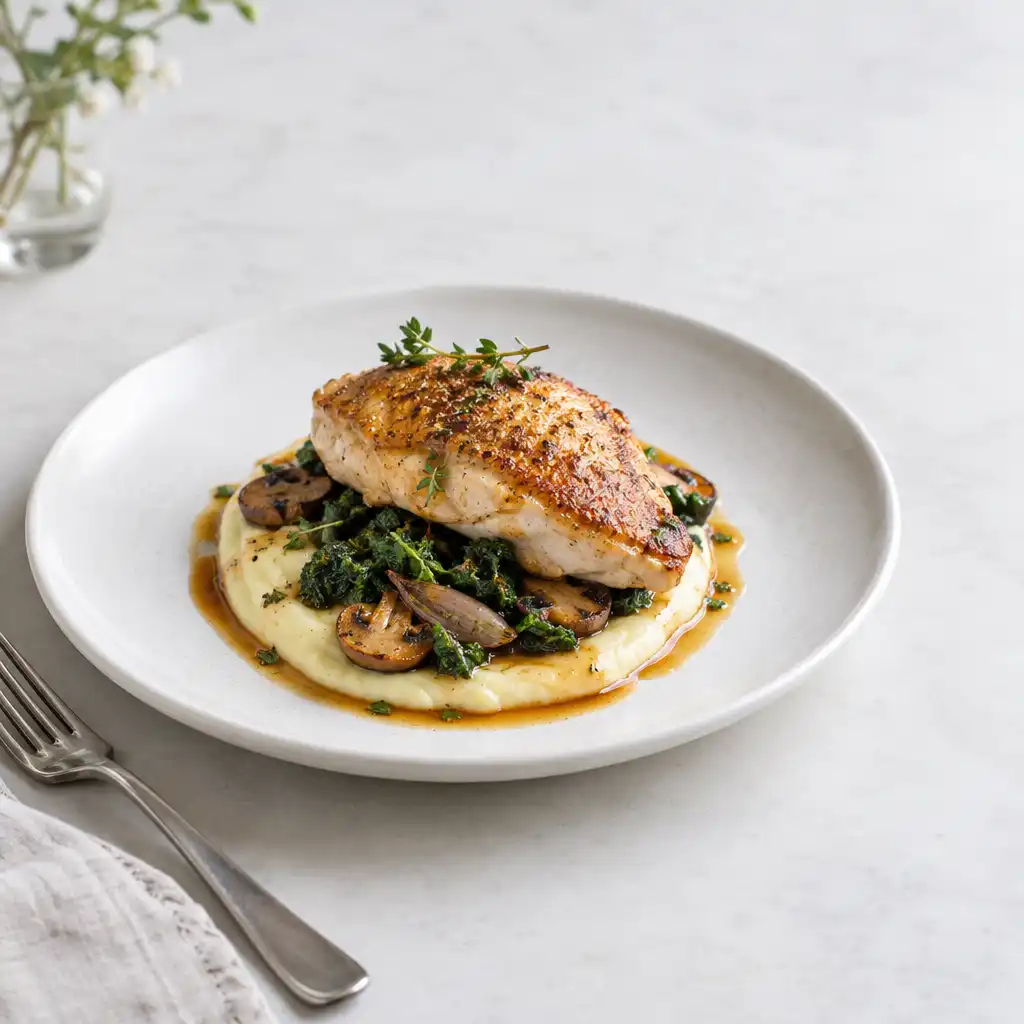
A carefully composed restaurant dish on a white ceramic plate
A composed plate where colour, texture and proportion are considered together.

03 / On the plate

Every element earns its place.

On the plate, balance is more than a list of ingredients. Flavour, texture, temperature and portion all work together to make a dish satisfying and easy to return to. Something bright can make a richer note feel lighter; a crisp edge can change the pace of a softer element. Proportion matters too, giving each part enough presence without letting one idea crowd out another.

Considered plating leaves room for the guest. Food should feel clear, inviting and ready to enjoy, not like a puzzle that needs explaining. The arrangement can guide the first bite, while the meal itself remains uncomplicated: take your time, follow your appetite and let the dish do the talking. Attentive service supports that ease without overtaking it.

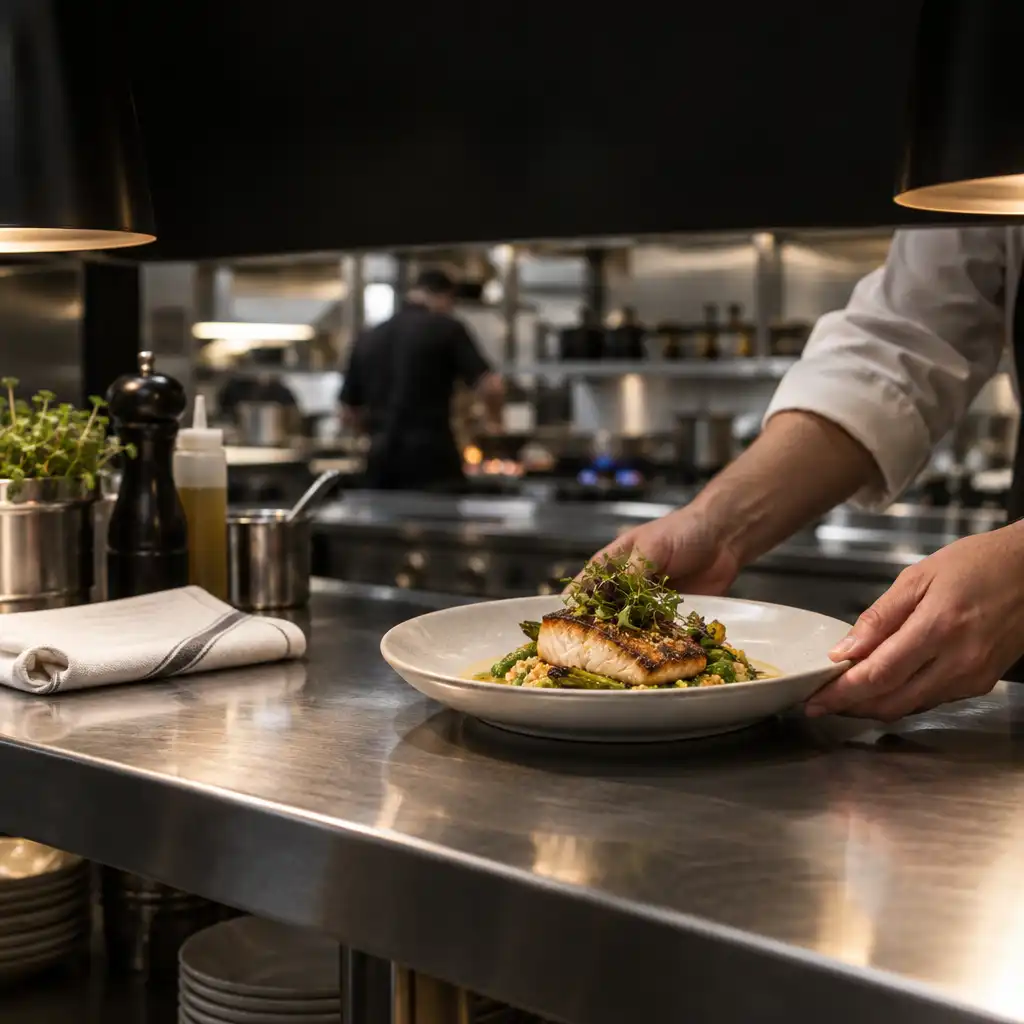
A finished plate being placed on a restaurant kitchen pass
The pass is where the kitchen’s work is gathered before it enters the dining experience.

04 / Kitchen to table

The pass and the table

The pass is the point where the kitchen’s work is checked, finished and handed into the dining experience. It brings a dish into view as a whole: its balance, its presentation and its readiness to leave the kitchen. That connection matters because clear handover supports a calm, attentive rhythm once the food reaches the room.

  1. 01

    Check the whole plate

    The final look and balance of a dish matter before it leaves the kitchen. Seeing the plate as one complete thing makes space for a last, practical check: whether the elements sit together clearly and whether it feels ready for the person waiting to eat it.

  2. 02

    Keep the handover clear

    Clear communication between kitchen and floor helps the dining rhythm stay calm and attentive. The guest-facing result is straightforward: food arrives with care, and the room has the information it needs to support the meal without creating unnecessary noise around it.

  3. 03

    Let the food arrive simply

    Service should support the dish rather than compete with it. A simple arrival gives guests room to settle in, notice what is on the table and begin eating at their own pace. The focus stays where it belongs: on food, conversation and the experience of sharing a meal.

06 / The room

The room changes the meal

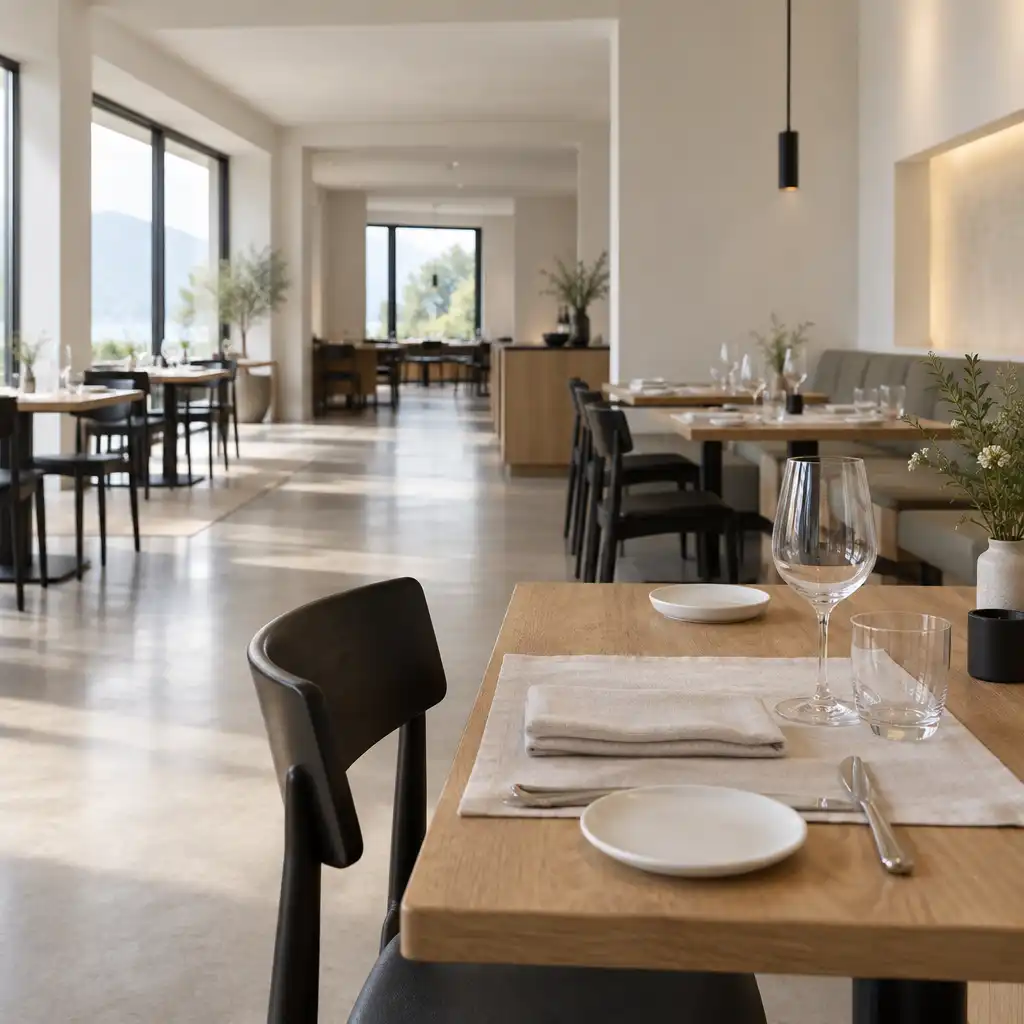
A meal is shaped by more than what is on the plate. Light across the table, room for a glass and a shared dish, the flow of conversation and the pace of service all influence how food lands. The setting does not need to compete with the meal; it can simply make it easier to notice, share and enjoy.

A neatly set dining table leading into a contemporary dining room
A table setting and room depth that leave space for food, conversation and an unhurried meal.

Space to settle

A calm, uncluttered setting helps keep the food in focus and conversation easy to keep. Table space matters in small ways: it gives dishes room to arrive, gives people room to share, and lets the meal develop without the setting asking for more attention than it needs.

Service with attention

Attentive service is about reading the table and supporting the meal without overtaking it. The most useful gestures are often the clearest ones: helping the pace stay comfortable, leaving room for conversation and keeping the dining experience connected to what is being served.

07 / Dietary dining

For dietary questions

For dietary information, please check the dedicated Dietary Dining page and share relevant requirements when you send a booking enquiry. Details and requests need confirmation, so no dish should be assumed suitable for a particular requirement without that confirmation. Sending an enquiry asks for a table; it does not confirm a reservation or confirm dietary arrangements.

Read dietary dining information

08 / Next steps

Plan the meal

When the kitchen story has given you a sense of the food, the next step is practical planning. Review the information that helps shape your visit, or move to a booking enquiry when you are ready to ask about a table.

09 / Booking enquiry

Ready to ask for a table?

Send a booking enquiry after reviewing the menu, dietary information and visit details. Submitting the form is an enquiry, not a confirmed reservation. Your table is only confirmed when confirmation is received separately.

Send booking enquiry